A few notes on composing computer graphic scenes...
When I start composing a scene I first choose what objects I will include, where will place the camera and how I will light the scene.
All object have many properties that can be manipulated that affect other objects in the scene. The most obvious property is COLOR. We do not perceve color in a vacuum. If you place a red object near a blue one its collor will be preceived to have taken on a purple tint; whereas, if you place it near a yellow one the tint will shift to orange.
Teture is also an important property to address. A rough surface will have a differnt surface normal (the direction light reflects or bounces) than a shiny or metalic one. Compare a mirror to a piece of velvet.
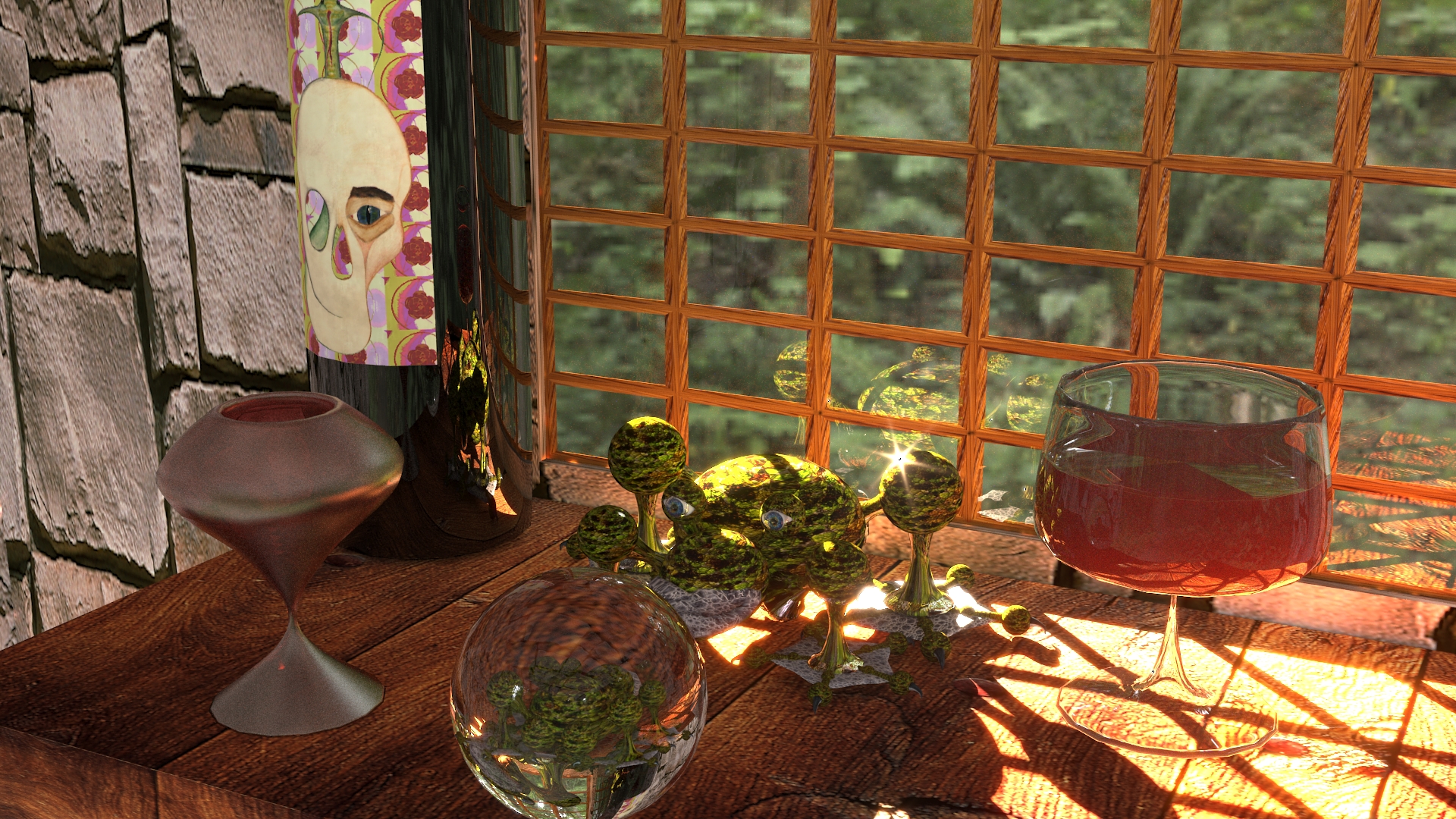
Transperency/Translucency can also affect how you perceive objects. Translucent objects filter the light passing through them allowing only a fraction of the light to pass. The thicker the object the less light passes. Look at the wine glass in the image. Where the glass is thick it appears opaque and where it is thin it is transperant.
Lighting is used to define the mood of a scene. This scene is lit with simulated sunlight passing through the window at an angle. The angle of light defines the angle of the shadows and the caustics displayed by the object within the scene.